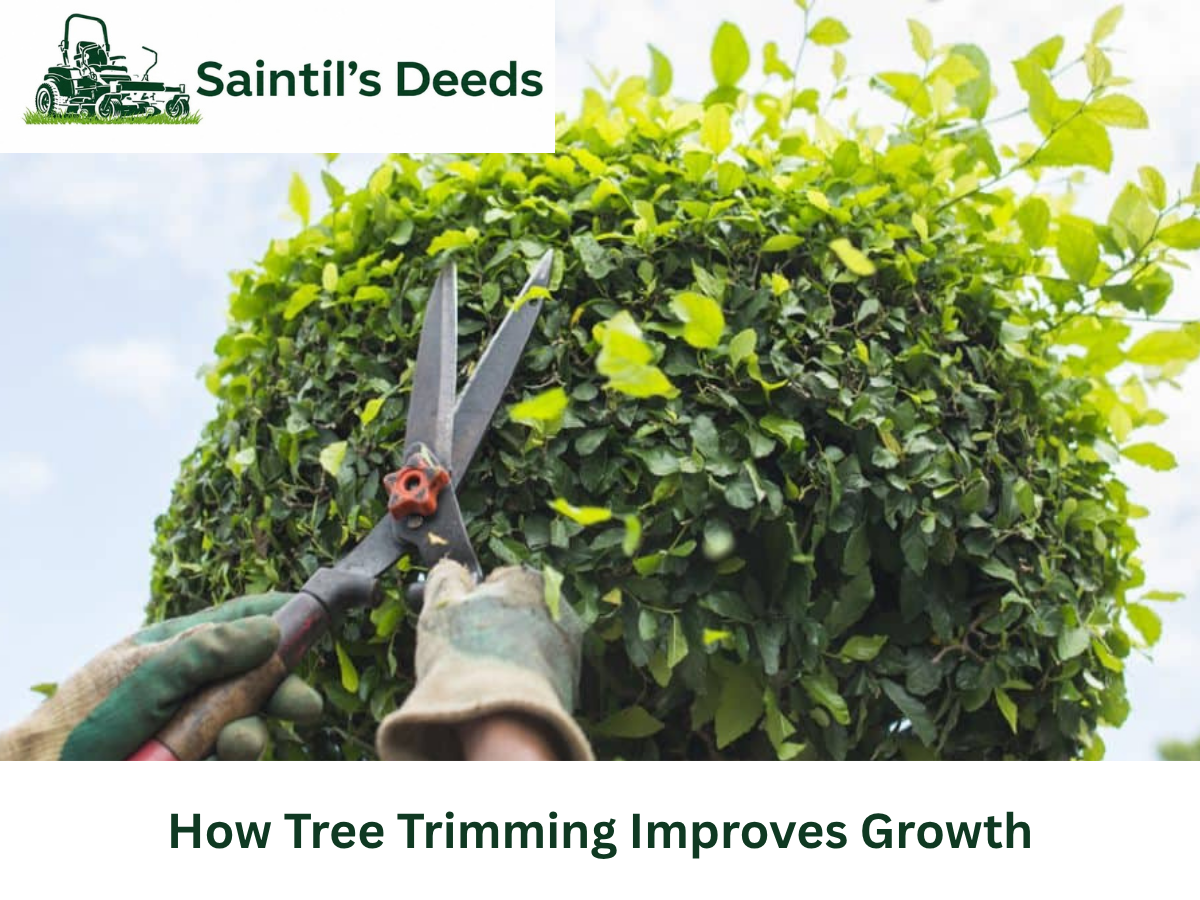
Tree care is not just about cutting branches. It is about guiding growth, preventing disease, and helping the tree use its energy in the best possible way. When done correctly, trimming can significantly improve how a tree grows over time. It encourages stronger structure, healthier branches, and better overall appearance.
Many people assume trees grow best when left completely alone. In reality, unmanaged growth can lead to weak branches, overcrowded canopies, and increased risk of disease. This is where regular maintenance becomes important. Professional landscaping services, including those shared by Saintil’s Deeds, often emphasize trimming as a core part of long-term tree health.
In this blog, we will explore how tree trimming improves growth, why it matters, and how homeowners can make better decisions about caring for their trees.
Understanding How Tree Trimming Supports Healthy Growth
Tree trimming is the selective removal of branches to improve the structure and health of a tree. It is not about cutting randomly but about shaping the tree so it grows in a balanced and strong way.
Encouraging Stronger Branch Structure
When weak, dead, or overcrowded branches are removed, the tree redirects its energy toward healthier parts. This helps the remaining branches grow stronger and more stable. Over time, the tree develops a more balanced shape that can better withstand wind, storms, and seasonal changes.
Improving Light and Air Flow
Dense tree canopies can block sunlight and trap moisture. This creates an environment where fungi and pests can thrive. By trimming excess growth, sunlight and air can move more freely through the branches. This improves photosynthesis and reduces the risk of disease.
Supporting Long-Term Growth Patterns
Trees naturally compete with each other for resources. Without trimming, some branches may grow faster than others, creating an uneven structure. Regular trimming helps guide growth in a controlled way, leading to healthier long-term development.
The Biological Response Behind Tree Trimming
Trees are living organisms that respond to cuts and wounds in unique ways. Understanding this process helps explain why trimming can improve growth when done correctly.
Energy Redistribution in Trees
When a branch is removed, the tree no longer needs to send energy to that section. Instead, it redirects nutrients and water to stronger branches and new growth points. This improves overall vitality and encourages healthier development.
Growth Hormones and Bud Activation
Trees contain natural hormones that control growth. When a branch is trimmed, it can stimulate nearby buds to grow more actively. This leads to fuller foliage and better canopy structure over time.
Healing and Protection Mechanisms
After trimming, trees begin sealing the cut area to protect against pests and disease. This natural healing process strengthens the tree’s defense system. However, improper cuts can slow healing and create long-term damage, which is why correct technique is important.
Best Practices for Effective Tree Trimming
Proper trimming requires timing, tools, and technique. When done correctly, it enhances growth rather than harming the tree.
Choosing the Right Time for Trimming
Different trees have different ideal trimming seasons. In many cases, late winter or early spring is best because trees are still dormant. This reduces stress and allows new growth to emerge quickly when the growing season begins.
Using Proper Tools
Sharp and clean tools are essential. Dull blades can damage branches and create rough cuts that take longer to heal. Common tools include pruning shears, loppers, and saws for thicker branches.
Making Clean and Strategic Cuts
Cuts should always be made at the right angle and close to the branch collar without damaging it. Removing too much at once can stress the tree, so gradual trimming is often more effective than heavy cutting.
Avoiding Over-Trimming
One of the most common mistakes is removing too many branches at once. This can weaken the tree and slow down growth. A general guideline is to avoid removing more than 25 percent of the canopy at one time.
Common Mistakes That Can Harm Tree Growth
While trimming is beneficial, improper methods can have the opposite effect.
Cutting at the Wrong Time
Trimming during active growth or extreme weather conditions can shock the tree. This may lead to slower recovery and weaker new growth.
Topping Trees Incorrectly
Topping, or cutting large sections of the top of a tree, is harmful. It creates weak regrowth and increases the risk of decay. Proper shaping should always be used instead.
Ignoring Diseased Branches
Dead or infected branches should always be removed first. Leaving them in place allows disease to spread to healthy areas of the tree.
Using Improper Equipment
Using blunt or unclean tools increases the risk of infection. Clean cuts are essential for proper healing.
Benefits of Tree Trimming for Property and Landscape Value
Tree trimming is not only about tree health. It also impacts the overall appearance and value of your property.
Improved Curb Appeal
Well-maintained trees make a property look cleaner, safer, and more attractive. This is especially important for homeowners preparing to sell their property.
Increased Safety
Overgrown branches can pose risks during storms or high winds. Trimming reduces the chance of falling branches damaging property or causing injury.
Healthier Landscape Ecosystem
When trees are properly maintained, surrounding plants also benefit from better sunlight and airflow. This creates a healthier overall landscape environment.
Long-Term Cost Savings
Preventing tree damage early reduces the need for expensive removals or emergency services later. Regular maintenance is a cost-effective long-term strategy.
Professional Tree Care vs DIY Trimming
Some homeowners choose to handle trimming themselves, while others prefer professional services. Both options have advantages depending on the situation.
When DIY Trimming Works
Small branches and minor shaping can often be handled safely by homeowners. Basic tools and proper knowledge are usually enough for light maintenance.
When Professionals Are Needed
Large trees, high branches, or signs of disease require expert attention. Professionals understand tree biology and use proper techniques to avoid long-term damage.
Companies like Saintil’s Deeds often provide structured care plans that ensure trees remain healthy year-round. Their approach focuses on long-term growth rather than quick cosmetic fixes.
Conclusion
Tree trimming plays a major role in supporting healthy growth, improving structure, and enhancing the overall appearance of trees. When done correctly, it helps trees live longer, grow stronger, and resist disease more effectively.
From improving sunlight exposure to encouraging better branch development, trimming is one of the most important parts of long-term tree care. It also adds value to your property and creates a safer outdoor environment.
For homeowners looking to maintain healthy landscapes, understanding proper trimming techniques is essential. Whether you choose to handle small tasks yourself or rely on professional services, consistency is key.
Saintil’s Deeds focuses on helping property owners maintain strong and healthy trees through careful and informed maintenance practices. For anyone serious about improving their landscape, reviewing your current tree care approach is a strong first step toward better long-term growth.
FAQs
How often should trees be trimmed?
Most trees benefit from trimming every one to three years, depending on species and growth rate.
Does trimming really help trees grow faster?
Yes. Proper trimming redirects energy to healthy branches, encouraging stronger and more efficient growth.
What is the best season for tree trimming?
Late winter or early spring is usually best for most tree types.
Can over-trimming damage a tree?
Yes. Removing too many branches at once can stress the tree and slow growth.
What tools are needed for basic trimming?
Pruning shears, loppers, and a small saw are commonly used for home maintenance.
Should dead branches be removed immediately?
Yes. Dead branches should be removed as soon as they are noticed to prevent disease spread.
Is professional trimming worth it?
For large or complex trees, professional care ensures safety and proper long-term growth.