
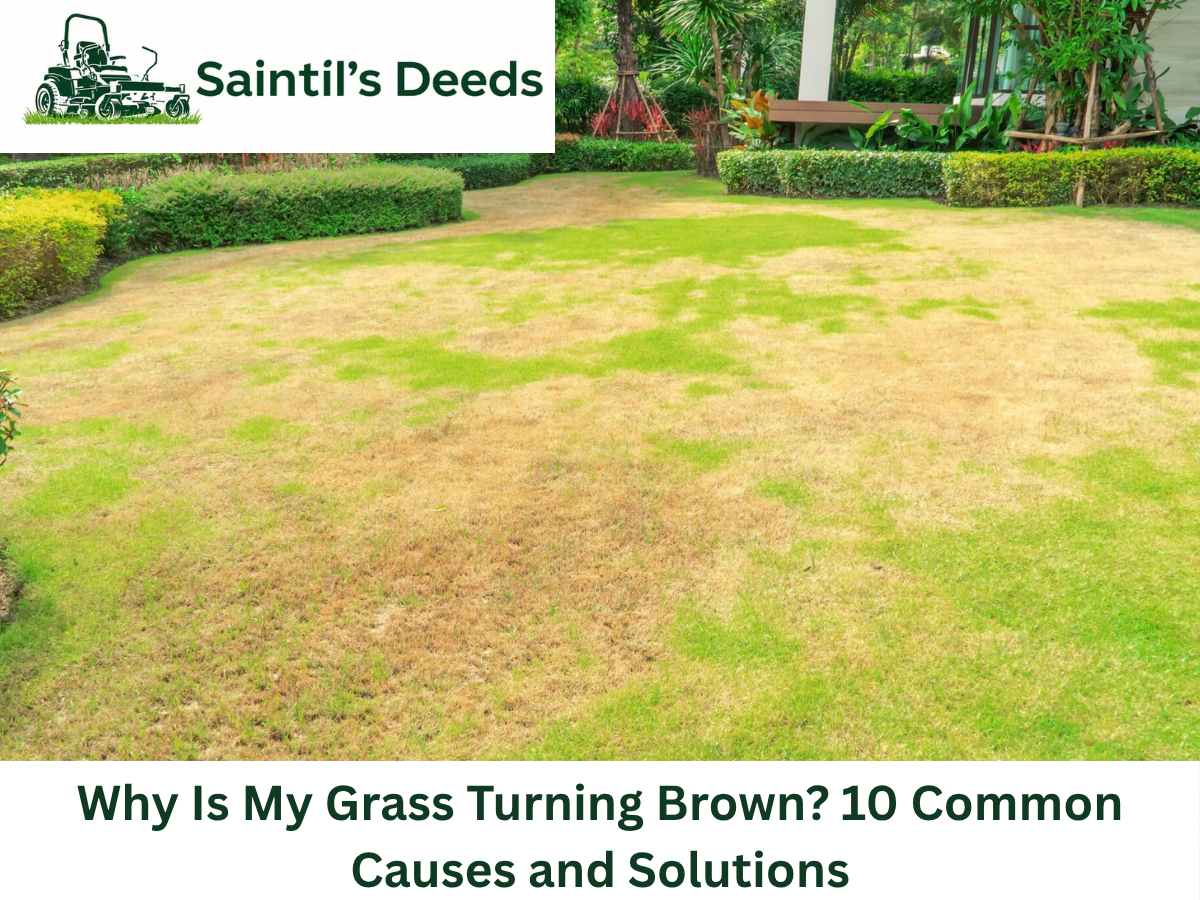
Brown grass does not always mean dead grass. Heat, poor watering, compacted soil, insects, lawn diseases, pet urine, and even mowing habits can change the color of your turf. The right solution depends on what is happening above and below the soil.
If you are wondering why your grass is turning brown, start by looking at the pattern, soil moisture, recent weather, and your lawn care routine. Below are 10 common causes of brown grass and practical ways to address each one.
Why Grass Turns Brown
Grass stays green when its roots receive enough water, oxygen, and nutrients to support healthy growth. When one or more of these needs are not met, the plant becomes stressed. Browning is often one of the first visible signs.
Season also matters. Warm-season grasses naturally slow their growth and may turn brown during cooler weather, while cool-season grasses can struggle during prolonged summer heat. Before treating the lawn, make sure the color change is not simply normal seasonal dormancy.
The location and shape of brown areas can provide additional clues. Large, evenly brown areas often point to watering or weather problems. Small circles, irregular patches, or grass that pulls up easily may indicate insects, disease, pets, or damaged roots.
10 Common Causes of Brown Grass and How to Fix Them
1. Not Enough Water
Lack of water is one of the most common reasons for a lawn to turn brown. Grass loses moisture during hot, dry weather, and shallow roots may not be able to reach enough water to keep the blades green.
Signs of drought stress can include curled or folded blades, a dull green or gray color, and footprints that remain visible after walking across the lawn. The grass may eventually become straw-colored if dry conditions continue.
The solution is usually deep, less frequent watering rather than short watering sessions every day. Many established lawns need around 1 to 1.5 inches of total water per week, including rainfall, although actual needs depend on grass type, soil, season, and local conditions.
Water early in the morning when possible. This reduces evaporation while allowing grass blades to dry during the day.
2. Too Much Water
More water does not always produce greener grass. Overwatering can fill the air spaces in soil and reduce the oxygen available to grass roots. Constantly wet soil can also encourage certain lawn diseases.
Check the soil before running your irrigation system again. If the ground remains wet or soft for long periods, reduce watering and investigate drainage problems.
A simple approach is to water deeply and then allow the upper portion of the soil to begin drying before watering again. Irrigation schedules should also be adjusted after rain or during cooler periods when lawns lose less moisture.
3. Heat and Drought Stress
Extended periods of high temperatures can cause even properly maintained lawns to lose color. Grass may enter dormancy as a survival response, directing its limited resources toward the roots instead of maintaining green blades.
During extreme heat, avoid putting additional stress on the lawn. Raise the mower height, reduce heavy foot traffic, and avoid aggressive treatments such as dethatching when the turf is already struggling.
Dormant grass can sometimes recover when temperatures improve and adequate moisture returns. However, prolonged drought can kill sections of turf, making reseeding or sod replacement necessary.
4. Cutting the Grass Too Short
Scalping a lawn removes too much of the grass blade at once. This reduces the plant’s ability to produce energy and exposes the soil to more direct sunlight, which can increase moisture loss.
A useful mowing rule is to avoid removing more than one-third of the grass blade during a single mowing. The ideal mowing height varies according to the grass species, so identify your turf type before choosing a mower setting.
Sharp mower blades are equally important. Dull blades tear grass rather than cutting it cleanly, leaving ragged tips that can make the lawn appear brown.
If mowing has become difficult to manage or the lawn continues to decline despite regular care, a professional lawn assessment from Saintil’s Deeds can help identify maintenance problems before they spread across the property.
5. Lawn Fungal Diseases
Fungal diseases can produce brown, yellow, or reddish areas that are easily confused with drought damage. Disease problems are more likely when grass stays wet for extended periods, particularly during warm and humid weather.
The appearance varies depending on the disease. Some problems create circular brown patches, while others cause spots or lesions directly on individual grass blades.
Start by improving basic lawn conditions. Avoid watering late in the evening, improve drainage, remove excessive thatch when appropriate, and avoid applying unnecessary nitrogen fertilizer.
Correct identification is important before using a fungicide. Applying the wrong product wastes money and may not address the actual cause.
6. Lawn-Damaging Insects
Certain insects feed on grass blades or roots and can leave large areas brown. Grubs, chinch bugs, sod webworms, and other pests can cause serious turf damage when populations become high.
One warning sign of root-feeding grubs is grass that lifts from the ground easily because the roots have been damaged. You may also notice increased bird or animal activity as they search the soil for insects.
Do not automatically apply an insecticide whenever you see brown grass. Inspect the affected area first and identify the pest whenever possible. Treatment methods and timing vary considerably between insects.
A healthy lawn with strong roots is also better able to tolerate limited insect activity than weak or heavily stressed turf.
7. Pet Urine Damage
Dog urine can create small brown spots surrounded by darker green grass. Urine contains nitrogen and salts, and a concentrated amount in one location can damage the grass.
Watering the area soon after a dog urinates can help dilute the concentration. For a longer-term solution, consider creating a designated pet area using a lawn-friendly surface.
Avoid relying on products that claim to change a pet’s urine chemistry without speaking with a veterinarian. Your pet’s health should always come before lawn appearance.
Severely damaged spots may need dead grass removed and new seed or sod installed.
8. Too Much or Too Little Fertilizer
Grass needs nutrients, but both nutrient deficiencies and excessive fertilizer applications can create problems.
A lawn lacking essential nutrients may become pale, thin, or slow-growing. On the other hand, excessive fertilizer can burn grass, leaving yellow or brown areas. Applying fertilizer during very hot weather can increase the risk of damage.
A soil test is one of the best ways to determine what the lawn actually needs. It can provide useful information about soil pH and nutrient levels instead of forcing you to guess.
Follow fertilizer label directions carefully and measure the lawn before calculating application amounts. Applying extra fertilizer does not produce faster or healthier results.
9. Compacted Soil and Poor Root Growth
Lawns with frequent foot traffic can develop compacted soil. When soil particles are pressed tightly together, water, oxygen, and nutrients have a harder time reaching the roots.
Compaction is common in pathways, children’s play areas, pet routes, and lawns with heavy clay soil. You may notice thin grass, standing water, or soil that feels extremely hard when dry.
Core aeration can help relieve compaction by removing small plugs of soil. This creates channels that allow air and water to move deeper into the root zone.
Aeration should be performed while the grass is actively growing so it has a better chance to recover. The best season depends on whether you have warm-season or cool-season turf.
10. Thatch Buildup and Poor Lawn Maintenance
Thatch is a layer of living and dead organic material that develops between green grass and the soil surface. A thin layer is normal, but excessive buildup can interfere with water movement and create favorable conditions for some pests and diseases.
Check the lawn by removing a small section of turf and measuring the thatch layer. If it is unusually thick, dethatching or core aeration may be appropriate.
Regular mowing, correct watering, sensible fertilizer use, and proper aeration can help prevent excessive buildup. Good lawn maintenance is usually more effective than waiting until serious brown patches appear.
Homeowners who want help identifying ongoing turf problems can also contact Saintil’s Deeds for professional lawn care guidance and maintenance services.
How to Identify What Is Causing Brown Spots
Before treating grass turning brown, spend a few minutes inspecting the affected areas. Applying fertilizer, pesticides, or extra water without knowing the cause can make some lawn problems worse.
First, look at the pattern. Brown grass across the entire lawn may suggest drought, dormancy, or irrigation problems. Small circles may be associated with pets or certain diseases. Irregular patches can point toward pests, uneven watering, soil conditions, or physical damage.
Next, check soil moisture several inches below the surface. Dry soil indicates the lawn may need more water, while constantly saturated soil suggests overwatering or drainage problems.
Finally, gently pull on the damaged turf. Grass that comes up unusually easily may have root damage. Inspect the soil underneath for insects, damaged roots, unusual odors, or excessive moisture.
How to Help a Brown Lawn Turn Green Again
The first step toward recovery is correcting the underlying cause. Adding more water or fertilizer without diagnosing the problem can increase stress rather than solve it.
Once the cause is addressed, remove dead material only when necessary and give living grass time to recover. Continue proper mowing and irrigation while limiting heavy traffic over weak areas.
Bare spots may require reseeding, plugging, or new sod. Choose a grass variety suitable for your climate, sunlight conditions, soil, and expected level of foot traffic.
For long-term results, focus on root health rather than color alone. A lawn with deep roots and healthy soil generally handles periods of heat, drought, and everyday use better than turf that depends on frequent watering and fertilizer.
How to Prevent Your Lawn From Turning Brown
Preventive maintenance is usually easier and less expensive than repairing a badly damaged lawn. A consistent routine can also make it easier to notice problems before they spread.
Mow at the recommended height for your grass species and keep mower blades sharp. Water according to weather and soil conditions rather than following the exact same schedule throughout the year.
Test your soil periodically before making major fertilizer or pH adjustments. Aerate compacted areas when appropriate and keep an eye out for early signs of insects or disease.
Irrigation systems should also be inspected regularly. A broken sprinkler head or poorly adjusted zone can leave one section dry while another receives too much water.
Professional lawn maintenance can be useful when several problems occur at the same time. Saintil’s Deeds can help homeowners evaluate lawn conditions, address maintenance concerns, and build a practical care routine for healthier grass.
Conclusion
Brown grass is a symptom rather than a single lawn problem. Lack of water, excessive irrigation, heat, poor mowing, fungal disease, insects, pet urine, fertilizer problems, compacted soil, and thatch can all cause similar-looking damage.
Start by inspecting the lawn carefully before choosing a treatment. Check moisture, roots, mowing height, irrigation coverage, and the shape of damaged areas. Once you identify the likely cause, make gradual corrections and give the grass enough time to recover.
If brown patches continue to spread or you want professional help maintaining a healthier lawn, contact Saintil’s Deeds. A proper lawn assessment can help identify the source of the problem and determine the right steps for restoring healthy, green grass.
Frequently Asked Questions
Can brown grass become green again?
Yes, if the grass is dormant or stressed but still alive. Correcting watering, mowing, soil, or nutrient problems may allow it to recover. Grass that is completely dead will need to be reseeded, plugged, or replaced with sod.
How can I tell whether brown grass is dead or dormant?
Dormant grass usually has living crowns and roots even though the blades are brown. Try gently pulling the grass. Turf that remains firmly rooted may still be alive, while dead grass often pulls away more easily.
Should I water brown grass every day?
Usually not. Daily shallow watering can encourage shallow roots and may contribute to disease. Most established lawns benefit more from deeper watering at appropriate intervals, depending on weather, soil, and grass type.
Why is my lawn brown even though I water it?
Several problems can cause this. The lawn may be receiving too much water, water may not be reaching the root zone, or the problem could involve disease, insects, fertilizer damage, compacted soil, or poor drainage.
Will fertilizer fix a brown lawn?
Only if a nutrient deficiency is actually causing the problem. Fertilizing drought-stressed, diseased, or overfertilized grass can make the damage worse. Consider testing the soil before making major fertilizer applications.
Why are only certain areas of my lawn turning brown?
Uneven browning can result from sprinkler coverage, pet urine, compacted soil, pests, disease, heavy traffic, or differences in sunlight. Inspect each affected area instead of assuming the entire lawn has the same problem.
When should I call a lawn care professional?
Consider professional help when brown areas continue spreading, the cause is unclear, pests or diseases are suspected, or the lawn does not recover after correcting basic watering and mowing problems. Early diagnosis can prevent a small damaged area from becoming a larger repair project.